Why Florida Homeowners Should Test Their Water Before Buying a Filtration System. When your water smells strange, leaves stains, tastes unpleasant, or makes your skin feel dry, it is natural to want a quick fix. Many homeowners start searching for a water softener, whole-house filter, reverse osmosis system, or salt-free conditioner before they know exactly what is in their water.
That is where water testing matters.
A water treatment system should not be chosen based on guesswork. Florida water can vary from one home to the next, even in the same neighborhood. One house may have hard city water with chlorine. Another may have well water with iron, sulfur odor, sediment, or bacteria concerns. A third may need drinking water filtration at the kitchen sink more than a whole-house solution.
Before investing in a system, the smarter first step is to test the water.
Water Problems Can Look Similar
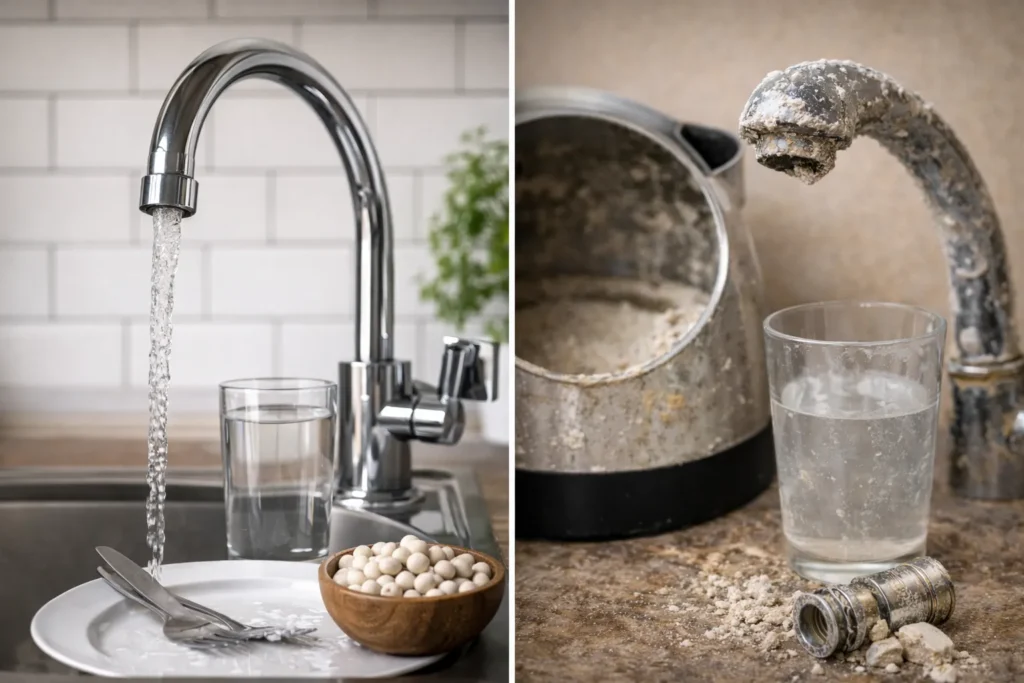
Many water issues share similar symptoms. Cloudy glasses, spots on dishes, buildup around faucets, dry skin, and dull laundry may point to hard water. A rotten egg smell may suggest sulfur-related issues. Orange or brown staining may be linked to iron. A chlorine taste is common in many municipal water supplies.
But symptoms alone do not tell the whole story.
For example, odor can come from the water source, plumbing, a water heater, or bacterial activity. Staining can be caused by different minerals. Poor taste may involve chlorine, total dissolved solids, old pipes, or a combination of issues.
Testing helps separate what you can see, smell, and taste from what is actually happening in the water.
City Water and Well Water Need Different Conversations
Central Florida homeowners often fall into two groups: homes on municipal water and homes on private wells.
City water is treated before it reaches your home, but that does not mean every homeowner loves the taste or feel. Many cities use disinfectants such as chlorine to protect public water systems. Some homeowners choose filtration to improve taste, reduce odor, and improve everyday water quality at the tap.
Private well water is different. A private well is the homeowner’s responsibility. The water is not monitored the same way public water systems are. That means routine testing is important, especially for bacteria, nitrate, pH, total dissolved solids, hardness, iron, sulfur, and other local concerns.
If you are on a private well, testing is not just about comfort. It is part of protecting your household.
Testing Helps You Avoid Buying the Wrong System
Not every water system solves every problem. A water softener is designed to address hardness minerals. A reverse osmosis system is commonly used for high-quality drinking water at a specific tap. A whole-house filtration system treats water before it moves through the home. A salt-free conditioner may help reduce scale without adding salt, but it does not work the same way as a traditional softener.
Without testing, homeowners may buy a system that improves one issue but leaves the main problem untouched.
For example, if the water has iron and sulfur odor, a basic softener may not be enough. If the main concern is drinking water taste, a point-of-use reverse osmosis system may be the better starting point. If the entire house has staining, odor, or scale, a broader treatment plan may be needed.
Testing makes the recommendation more accurate.
Water Testing Supports Better Long-Term Maintenance
A water test is also useful after installation. It creates a baseline. When you know what your water looked like before treatment, it is easier to measure whether the system is doing its job later.
This matters for filter changes, membrane replacement, salt usage, maintenance schedules, and future upgrades. If the water quality changes over time, updated testing can help identify whether the issue is the source water, the system, or normal maintenance.
For Florida homeowners, this is especially helpful after storms, flooding, well repairs, plumbing changes, or noticeable changes in taste, smell, or color.
What Should Homeowners Test For?
The right test depends on your water source and concerns. Common starting points include hardness, iron, sulfur odor, chlorine, pH, total dissolved solids, bacteria, nitrate, and sediment.
For private wells, annual testing is especially important. Homeowners should also consider testing after flooding, well work, nearby land disturbance, or any sudden change in the water.
A professional water consultation can help you understand which issues are comfort-related, which may affect plumbing and appliances, and which should be evaluated for health and safety.
RainKing Starts With the Water
RainKing Systems offers free water testing and water treatment solutions for homeowners throughout Central and South Florida. Instead of recommending a one-size-fits-all system, the goal is to identify what is happening in your water first.
Whether you are dealing with hard water, stains, odor, chlorine taste, well water concerns, or drinking water quality, a water test gives you a clearer path forward.
Before you invest in a filtration system, start with the facts. Test your water, understand the results, and choose a system designed for your home.